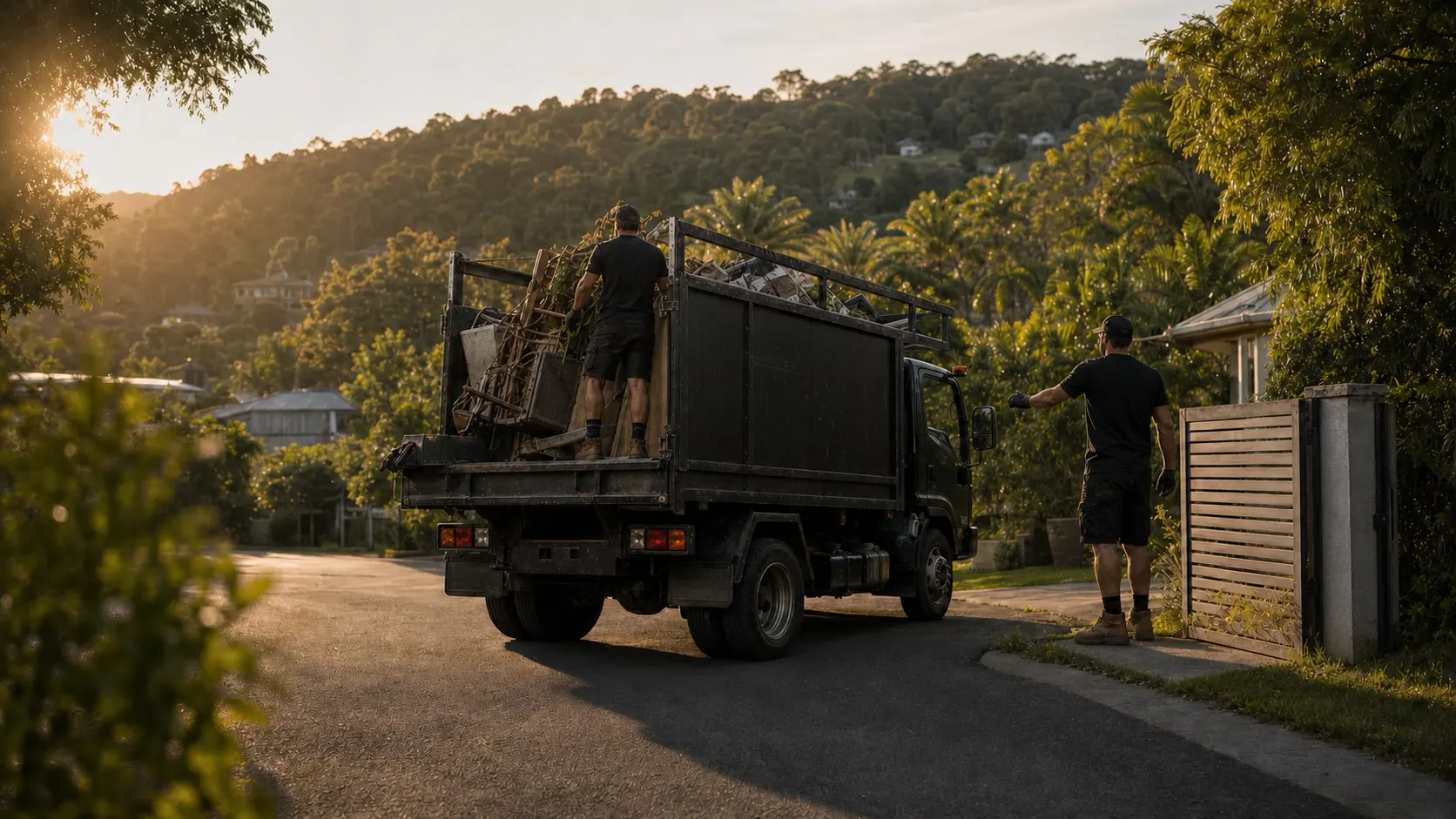
Start with the large items
List sofas, mattresses, whitegoods, cabinets, tables and other bulky pieces one by one. These determine how the remaining loose material can be loaded around them.
Include sizes for unusually large pieces and mention whether they can be dismantled or need to leave the property in one piece.
Group the loose material
Count bags, boxes or tubs and separate household clutter from garden or renovation material. If the pile is contained in a corner, estimate its length, width and average height.
Avoid descriptions such as “a small pile” without a photo or reference. Different people can mean very different volumes by the same phrase.
Take photos that explain the job
Use one wider photo to show the whole load, then closer photos for material detail. Include the carrying route when stairs, narrow access or distance from the truck may be relevant.
Do not crop out extra items sitting beside the main pile. A complete view produces a more useful assessment.
Useful details for the quote
- List every major bulky item
- Count bags, boxes and tubs
- Group material by type
- Measure the rough pile dimensions
- Take wide and close photos
- Show difficult access in the photos